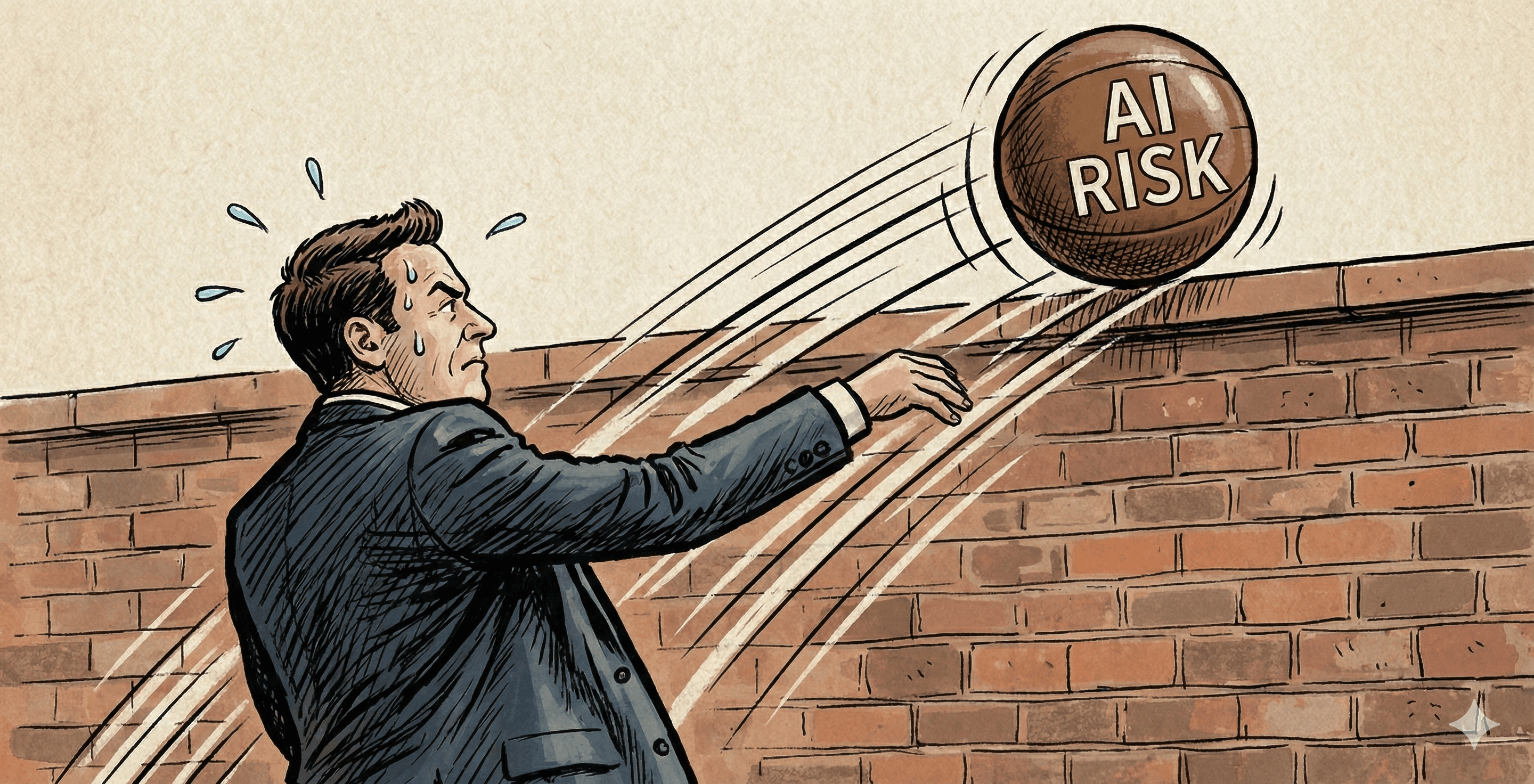
When regulators delay and insurers retreat, who's managing AI risk?


Last week brought uncertainty from both sides of the Atlantic as noted in three separate Financial Times articles and other sources.
In the US, major US insurers are lobbying to exclude AI liabilities because they can't price the risk. The proposed Executive Order that would seek to preempt state laws on AI has been paused.
Meanwhile in the EU, the European Commission postponed key provisions of the EU AI Act because AI advanced faster than the legislative process could accommodate. As the head of Norway's sovereign wealth fund noted, tensions remain between the EU's goal to become an AI powerhouse and the inclination to regulate.
Both regulators and insurers face the same challenge: AI's rapid advances challenge traditional frameworks built for static products or predictable risks. What's clear is that AI delivers significant value but needs oversight and controls to deploy safely. Regulators, insurers and other external players will catch up, but until then organisations must fill the gap while staying ready to adapt.
Robust and agile AI governance is the key, allowing organisations to:
Ensure oversight and control: Visibility into which AI systems operate where, what data they access, and how they integrate with existing risk and compliance frameworks.
Manage risks holistically: Address technical risks like fabrication and hallucination alongside broader concerns like reputational and financial risks, integrated with existing frameworks.
Deliver value sustainably: Clear stakeholder ownership, solid business cases, the right skills and roles, and robust oversight make deployments successful long-term.
Interface confidently with external stakeholders: Present credible information to insurers, auditors, investors, and regulators with proper governance oversight.
Respond quickly to regulatory changes: Controlled adaptation rather than reactive crisis management as environments evolve.
Organisations building comprehensive AI governance now maximise value, minimise risk and position themselves to adapt as the external environment shifts.
Is your organisation building AI governance now or waiting for external clarity?
Last week brought uncertainty from both sides of the Atlantic as noted in three separate Financial Times articles and other sources.
In the US, major US insurers are lobbying to exclude AI liabilities because they can't price the risk. The proposed Executive Order that would seek to preempt state laws on AI has been paused.
Meanwhile in the EU, the European Commission postponed key provisions of the EU AI Act because AI advanced faster than the legislative process could accommodate. As the head of Norway's sovereign wealth fund noted, tensions remain between the EU's goal to become an AI powerhouse and the inclination to regulate.
Both regulators and insurers face the same challenge: AI's rapid advances challenge traditional frameworks built for static products or predictable risks. What's clear is that AI delivers significant value but needs oversight and controls to deploy safely. Regulators, insurers and other external players will catch up, but until then organisations must fill the gap while staying ready to adapt.
Robust and agile AI governance is the key, allowing organisations to:
Ensure oversight and control: Visibility into which AI systems operate where, what data they access, and how they integrate with existing risk and compliance frameworks.
Manage risks holistically: Address technical risks like fabrication and hallucination alongside broader concerns like reputational and financial risks, integrated with existing frameworks.
Deliver value sustainably: Clear stakeholder ownership, solid business cases, the right skills and roles, and robust oversight make deployments successful long-term.
Interface confidently with external stakeholders: Present credible information to insurers, auditors, investors, and regulators with proper governance oversight.
Respond quickly to regulatory changes: Controlled adaptation rather than reactive crisis management as environments evolve.
Organisations building comprehensive AI governance now maximise value, minimise risk and position themselves to adapt as the external environment shifts.
Is your organisation building AI governance now or waiting for external clarity?
Category
Insights
Insights
Insights
Written by

Scott Druck
Latest insights and trends
Let's have a conversation.
No pressure. No lengthy pitch deck. Just a straightforward discussion about where you are with AI and whether we can help.
If we're not the right fit, we'll tell you. If you're not ready, we'll say so. Better to find that out in a 30-minute call than after signing a contract.

Let's have a conversation.
No pressure. No lengthy pitch deck. Just a straightforward discussion about where you are with AI and whether we can help.
If we're not the right fit, we'll tell you. If you're not ready, we'll say so. Better to find that out in a 30-minute call than after signing a contract.

Let's have a conversation.
No pressure. No lengthy pitch deck. Just a straightforward discussion about where you are with AI and whether we can help.
If we're not the right fit, we'll tell you. If you're not ready, we'll say so. Better to find that out in a 30-minute call than after signing a contract.